Start with a reason to be there
It is easier to find a place in community life when you can describe what interests you. You might want to understand a local issue, meet neighbours around a shared activity or contribute a little time to an existing project. Those are different starting points, and each can lead to a different kind of gathering.
You do not need to arrive with a position on every question. A first visit can be an opportunity to listen and learn the vocabulary people use. Try a plain sentence in your own notes: “I would like to understand how this affects the place where I live.” That gives you a purpose without promising more than you can offer.
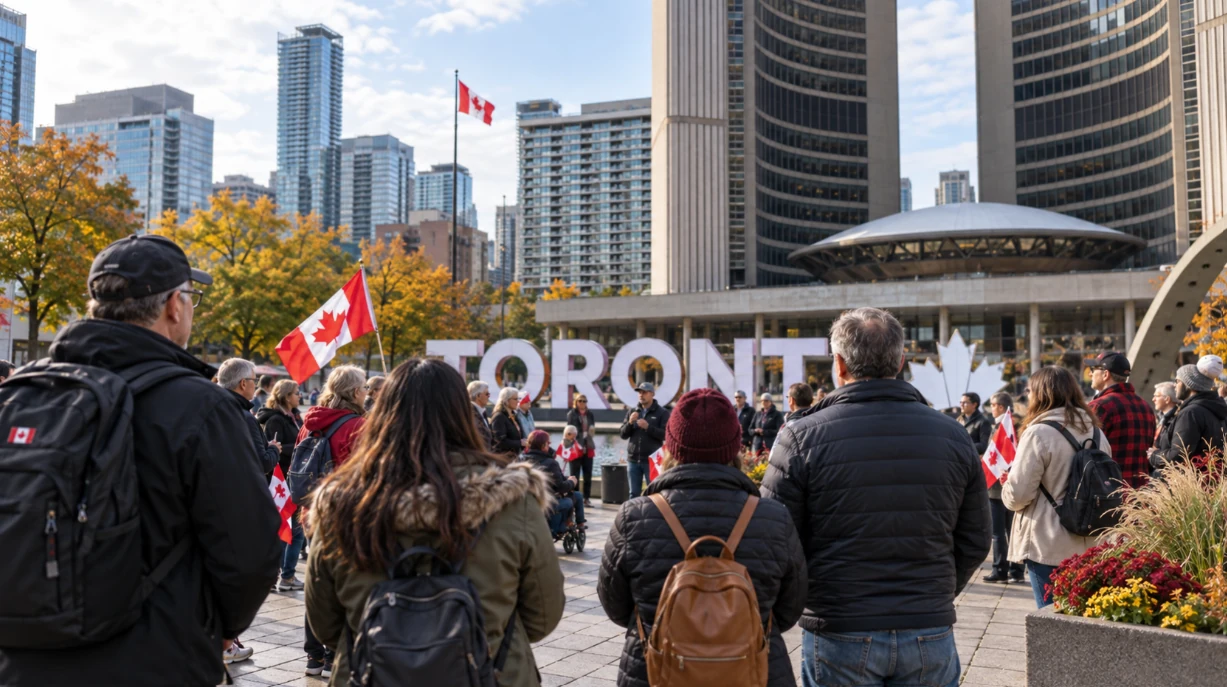
The visual here suggests movement through a shared space. It is an illustration of public life, not a record of people joining an identified group. The article’s practical prompts are suggestions for readers, rather than an account of the people shown.
Choose the scale of the conversation
A large public gathering may help you encounter a broad conversation. A smaller activity may allow more time for questions. The City’s Festivals & Events directory is a route to City and community event listings, while Toronto Public Library’s events directory offers filters for programmes, locations and audiences. Read the individual listing: format, registration and accessibility details can differ.
If you are interested in an ongoing role, the City’s volunteering resources describe opportunities across areas such as recreation, stewardship and cultural activities. Availability depends on the programme and its needs. Look at the actual responsibilities and current process before assuming a place is open.
Time is part of the decision. A single conversation, an occasional activity and a regular commitment ask different things of your week. Choosing a manageable level of involvement is a practical way to keep a promise to others.
Read the notice before making a plan
Find the organiser’s original information and check the date, time and precise meeting location. A picture of a familiar square is not an address. Notice whether the activity is in person, online or a combination, and whether it involves listening, discussion, a guided activity or a formal opportunity to submit comments.
For a City engagement project, read its page on Have Your Say Toronto. Check the question being asked and the stage the project has reached. A completed consultation can still provide useful background, but it is different from a current invitation to contribute.
Think about what will make participation comfortable for you: the route, the time available, seating or access needs, the weather for an outdoor activity and a way to leave when you need to. When a notice omits a detail that matters, ask the listed organiser rather than filling the gap with a guess.
Make room for more than one experience
During a conversation, begin with a question you can explain in one sentence. Listen for the difference between a personal experience, a suggestion and a factual claim. All may be worth hearing, but they do different work. If you repeat a statement later, make clear which kind it was and who offered it.
Give others time to finish and ask before moving a personal story into a wider discussion. Taking part need not mean sharing your name, image or opinion with a publication. This website does not collect attendee information, publish participant lists or ask readers to send photographs of strangers.
Illustrative example: a resident joins a discussion about activities in a local park. They first listen, then ask how an idea would fit the space and who can explain the process. Their useful contribution is a clear question and a willingness to check the answer, not an assertion that everyone nearby agrees.
Leave with a specific next step
A good follow-up is small enough to complete. Read the document mentioned in the discussion, check a notice with its author or ask what help an existing activity needs. If you offer to do something, be clear about the task and when you can return to it. Avoid accepting a role whose responsibilities remain unclear.
For neighbourhood ideas, the City’s Community Initiatives resources can help you discover relevant support and contacts. An independent group may have its own process instead. Ask which route applies, and do not treat a conversation as a confirmed booking or approval.
Use our Before you go checklist to prepare for the next meeting, then return to the questions you wrote down. Participation can develop through repetition: learning a little more, following through on one task and knowing what you would like to ask next.
Go to the original sources
Source review: 11 October 2026. Follow the original pages for current listings, participation instructions and project updates. A source link does not establish an affiliation.